It has probably happened to you as well that while brushing your teeth, you feel a small bump on your gum that looks like a pimple. Typically, this bump disappears on its own after a few days; however, if it reappears later, it indicates that the underlying issue has not yet been resolved. In this post, we explain why a gum boil keeps coming back and when you should see a dentist for a Dental Exam.
What does a gum pimple indicate?
A pimple on the gum is usually a sign of infection at the root or around a tooth. In such cases, pus accumulates at the site of the infection and may rise to the gum’s surface, appearing as a small white or yellow bump. However, a gum pimple can also stem from other causes, such as deep tooth decay or a foreign object becoming lodged between the tooth and the gum.
The important thing is that if it comes back consistently, it is likely indicative of more serious but treatable problems.
Why does a gum boil keep coming back?
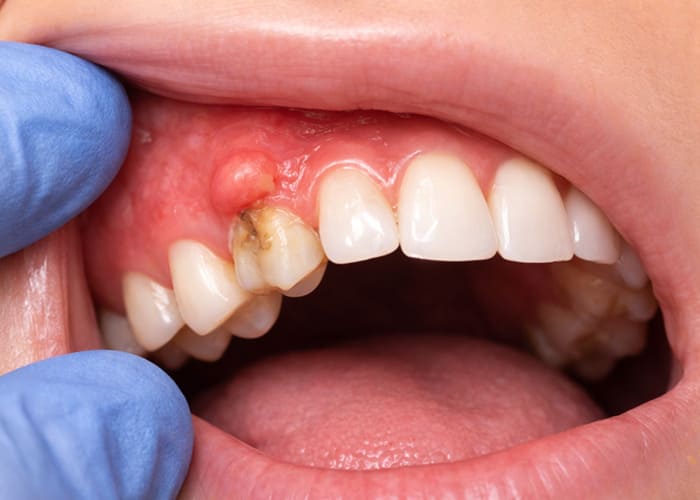
This is the crucial point: if a gum boil heals for a while but then reappears, you should not ignore it, as you may be dealing with one of the following issues:
1. Tooth root infection
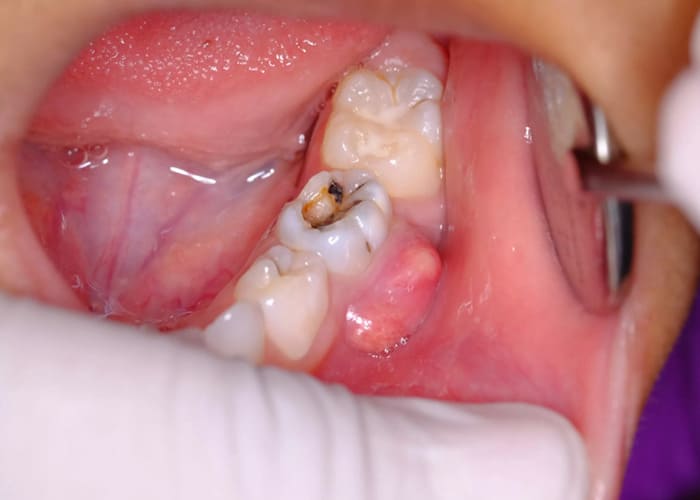
When tooth decay progresses and reaches the dental pulp, bacteria can cause infection and the death of the pulp tissue. In this scenario, bacteria and dead pulp tissue spread from the root tip to the surrounding tissues, potentially leading to pus formation. If the root infection is left untreated, it persists, and the gum boil may eventually return.
2. Gum disease (periodontitis)
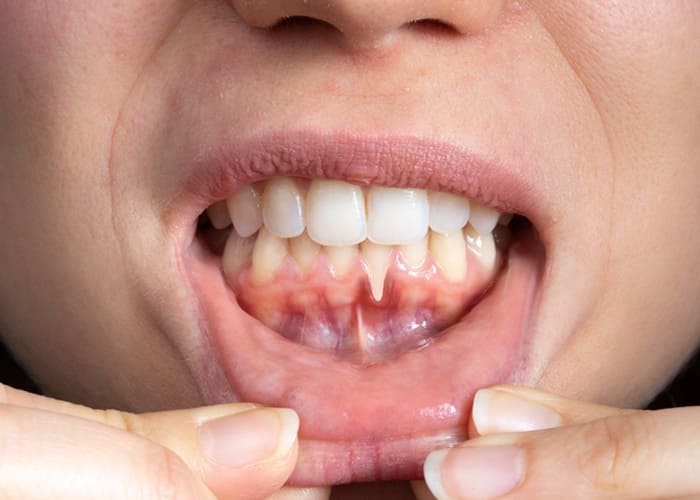
When a layer of bacteria remains on the teeth, it gradually hardens into tartar (calculus) and can accumulate in the deep spaces between the teeth and gums. This condition can lead to inflammation and gum disease. If the tartar in these areas is not treated, the gum boil keeps coming back.
Is That Gum Boil Back Again?
A gum boil that keeps coming back should not be treated as a temporary pimple. At King West Dentistry, we can examine the affected area and determine what is causing the recurring infection.
Call us to book an appointment and get your gums checked.
3. Partially impacted wisdom tooth
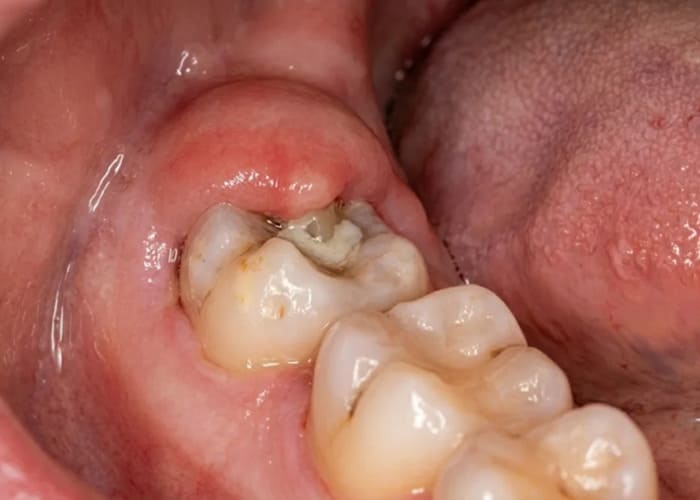
With a partially impacted wisdom tooth, only a portion of the crown emerges from the gum, while the rest remains beneath the gum tissue. This condition can cause recurrent inflammation of the tissue around the tooth, known as pericoronitis. In this situation, if you do not see a dentist for wisdom teeth removal, the inflammation and swelling of the gums may return with greater severity.
4. Foreign object trapped between tooth and gum
Sometimes, food particles get trapped between the tooth and the gum, causing inflammation in that area; In some cases, this inflammation develops into a small abscess on the gum. If the foreign object is not removed and the inflammation persists, the gum boil may reappear.
5. Tooth Root Fracture
Sometimes, tiny cracks form on the tooth root due to trauma, teeth grinding, or chewing very hard foods. These cracks can create a pathway for bacteria to enter the tissues surrounding the tooth, leading to persistent infection. Consequently, the gum boil keeps coming back.
Is a gum boil dangerous?
Not if you visit the dentist promptly! However, if treatment is delayed, the consequences can be serious, including: damage to the bone surrounding the tooth
- Damage to the tissues surrounding the tooth and jaw
- Spread of infection to the sinuses, particularly with upper-jaw tooth infections
- Infection entering the bloodstream in severe cases
- Tooth loosening due to damage to supporting tissues
- Tooth loss if the infection progresses
The longer you delay visiting the dentist, the more difficult and costly the treatment becomes. So, do not ignore the signs.
How can you tell if a gum boil originates from the tooth or the gum?
You cannot determine whether the issue stems from the tooth or the gum based solely on the appearance of the boil. However, each condition presents different symptoms: if the problem originates from the tooth, pain usually occurs during chewing, and the tooth becomes sensitive to pressure; conversely, if the issue is gum-related, the gum tissue surrounding the tooth typically becomes red and swollen, and a deep pocket may have formed between the tooth and the gum.
Does popping a gum boil cure it?
We strongly advise against doing this! If the gum boil bursts spontaneously or with pressure and its pus drains, the pressure and pain may be relieved for a while; but the gum boil is not completely cured. Unless the infection in the tooth root or gum tissue is treated, the boil is likely to recur.
How is a gum abscess treated?

At our practice, Dr. Gita Amiri first examines the abscess and, depending on the underlying cause, prescribes one of the following treatments:
Root canal therapy
During root canal therapy, the dentist removes infected tissue, nerves, and damaged blood vessels from inside the tooth. The root canals are then cleaned and filled with special materials to prevent the re-entry of microbes and the recurrence of the abscess.
Root canal retreatment
If a previously treated tooth becomes reinfected, root canal retreatment is performed. In this process, the old filling material is removed, the canals are cleaned and disinfected again, and then completely refilled to resolve the abscess.
Apicoectomy
If the infection persists at the root tip despite previous treatments, the dentist performs an apicoectomy to remove the root tip and infected tissue, subsequently sealing the end of the root.
Deep cleaning (scaling and root planing)
If the abscess is related to gum disease, the dentist removes tartar and plaque from below the gumline to reduce inflammation and restore gum health.
Tooth extraction
If the tooth is severely damaged and cannot be saved, or you have an impacted wisdom tooth, your dentist may recommend a Tooth Extraction to completely remove the source of infection.
When should you see a dentist immediately for a gum boil?
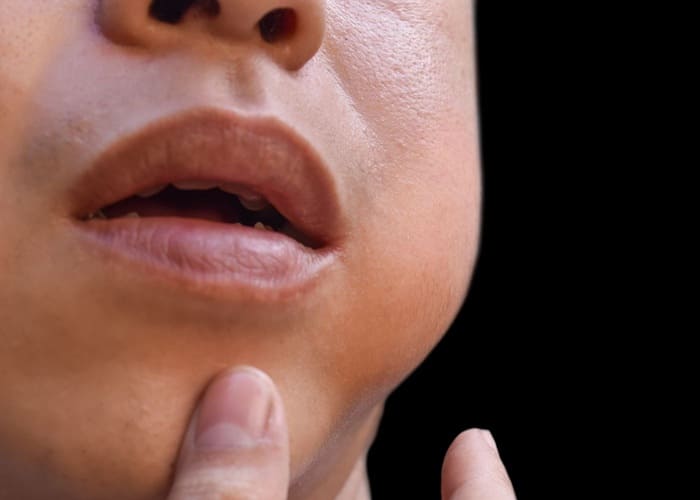
If a gum boil is accompanied by the following symptoms, you should visit a dentist as soon as possible for examination and treatment:
- Significant swelling on one side of the face or jaw that progressively worsens.
- High fever.
- Pain that is unbearable or worsens daily.
- Difficulty swallowing or breathing.
- Inability to open your mouth as usual.
- Swelling or inflammation around the eyes or neck.
- Recurring pus discharge from the gum and the boil returning.
These symptoms may indicate that the infection is spreading through the body and require prompt evaluation. No Dental Insurance in Toronto? Here’s How to Still Afford Quality Care.
What should you do before visiting the dentist?

Follow the guidelines below while waiting for your dental appointment, but do not delay seeking professional care.
- Do not tamper with the gum boil, and do not use a needle or any sharp objects to open it.
- Brush your teeth at least twice a day with a soft-bristled toothbrush and floss once daily, but avoid applying pressure to the inflamed area.
- To manage pain, take an appropriate analgesic as recommended by a doctor or pharmacist, and avoid taking antibiotics without professional advice.
Please note that these measures are intended only for temporary symptom management; be sure to visit a dentist as soon as possible for definitive treatment.
Conclusion
As we have seen, when a gum boil keeps coming back, it indicates a significant dental or gum issue. For this reason, we have repeatedly advised you in this article not to delay visiting a dentist; if you experience symptoms such as fever or difficulty breathing, seek immediate care from an emergency dentist or the nearest hospital. We hope that timely treatment helps you avoid a dental emergency.
FAQ
1. Can underlying conditions like diabetes cause gum boils?
Uncontrolled diabetes increases the risk of gum disease and oral infections because high blood sugar impairs the body’s ability to fight infection and repair tissue. Consequently, individuals with uncontrolled diabetes may be more prone to developing gum boils or experiencing their recurrence.
2. Can salt water or mouthwash cure a gum boil?
No. While salt water or mouthwash helps keep the mouth clean and temporarily reduces inflammation, they do not treat the underlying infection.
3. Can a gum boil cause bad breath?
Yes. Yes, if the gum boil is caused by an infection, the accumulation of bacteria and the release of infectious secretions can cause bad breath; this odor may not go away even after brushing.
4. Can the infection from a gum boil damage adjacent teeth?
Yes. If left untreated, bacteria can spread through the bone or gum tissue to nearby teeth and roots, potentially affecting the surrounding teeth.
Has a gum boil ever disappeared and then come back in the same spot? Tell us what symptoms you noticed before it returned in the comments.